
Subarachnoid Hemorrhage (SAH)
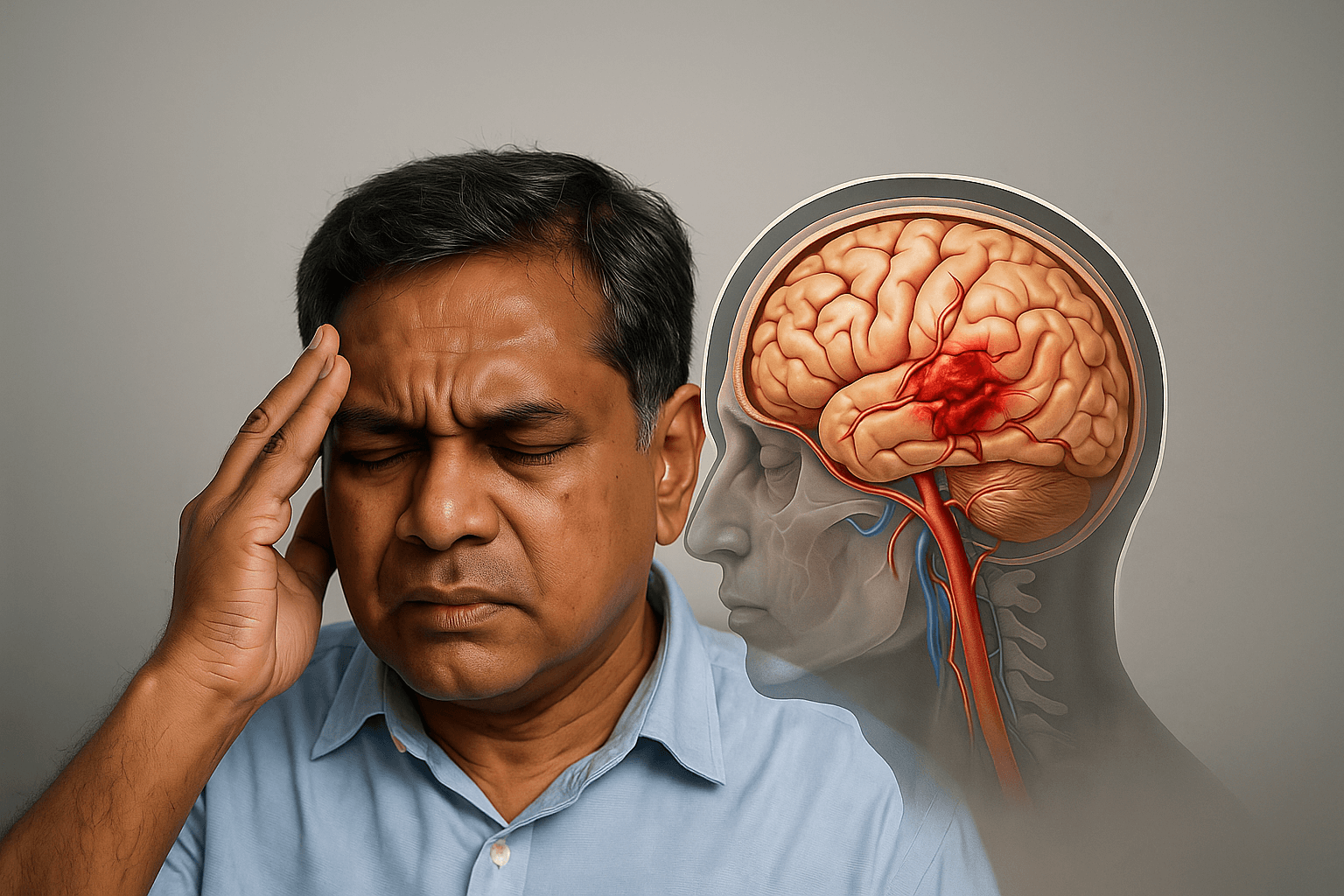
A Subarachnoid Hemorrhage (SAH) is a serious and sudden type of stroke caused by bleeding into the space around the brain, often due to a ruptured aneurysm. It presents with a “thunderclap headache” — the worst headache of one’s life — and can be life-threatening if not treated immediately. With rapid diagnosis and advanced neurovascular treatments, SAH outcomes can be improved significantly.
What Is a Subarachnoid Hemorrhage?
The brain is surrounded by a fluid-filled space called the subarachnoid space. When a blood vessel ruptures, blood leaks into this space, causing irritation, increased brain pressure, and risk of permanent damage.
In simple words: SAH is like a “sudden burst pipe in the brain” that floods the delicate space around it — and urgent care is needed to prevent severe consequences.
Causes & Conditions We Treat
SAH can occur due to:
- Ruptured Brain Aneurysm – the most common cause
- Arteriovenous Malformation (AVM) – abnormal blood vessel connections
- Head Trauma – severe injury leading to bleeding
- Other Vascular Fragility – rare conditions that weaken vessels
Why Immediate Treatment Matters
- Life-Saving: SAH has a high risk of death if not treated urgently.
- Prevents Re-Bleeding: Early intervention seals the ruptured vessel and avoids recurrence.
- Protects Brain Function: Prevents long-term disability such as memory loss, speech problems, or paralysis.
- Reduces Complications: Early treatment lowers risk of vasospasm (narrowing of brain vessels) and hydrocephalus (fluid build-up).
Treatment Options We Offer
1. Cerebral Aneurysm Coiling
A minimally invasive procedure where platinum coils are placed inside the ruptured aneurysm to seal it and stop bleeding.
2. Surgical Clipping
In selected cases, a neurosurgeon places a tiny clip at the base of the aneurysm to permanently close it off.
3. Endovascular Flow Diversion
Advanced stents may be used to divert blood flow away from the weakened vessel and allow natural healing.
4. Neurocritical Care
Specialized ICU management for blood pressure control, vasospasm prevention, and brain pressure management.
5. Rehabilitation
Post-SAH recovery often involves physiotherapy, speech therapy, and cognitive training to restore independence.
What to Expect During Treatment
- Emergency Evaluation – CT scan or lumbar puncture to confirm bleeding.
- Immediate Stabilization – Blood pressure control and ICU admission.
- Definitive Treatment – Either coiling, clipping, or stenting to secure the ruptured vessel.
- Recovery & Rehabilitation – Long-term support for neurological function and quality of life.
When Should You Suspect SAH?
- Sudden, severe “worst headache of life”
- Neck stiffness and vomiting
- Loss of consciousness or confusion
- Seizures or sudden vision problems
Why Choose Us?
With over 20 years of neurovascular expertise, I specialize in rapid diagnosis and life-saving endovascular and surgical treatments for Subarachnoid Hemorrhage. Our dedicated neurocritical care team ensures that every patient receives the highest level of emergency and long-term recovery support.
Take the Next Step Towards Safety
Subarachnoid Hemorrhage is a medical emergency — but with advanced treatment and expert care, survival and recovery are possible. If you or a loved one has symptoms, seek immediate medical help to protect your brain and future.