
Carotid Artery Stenting
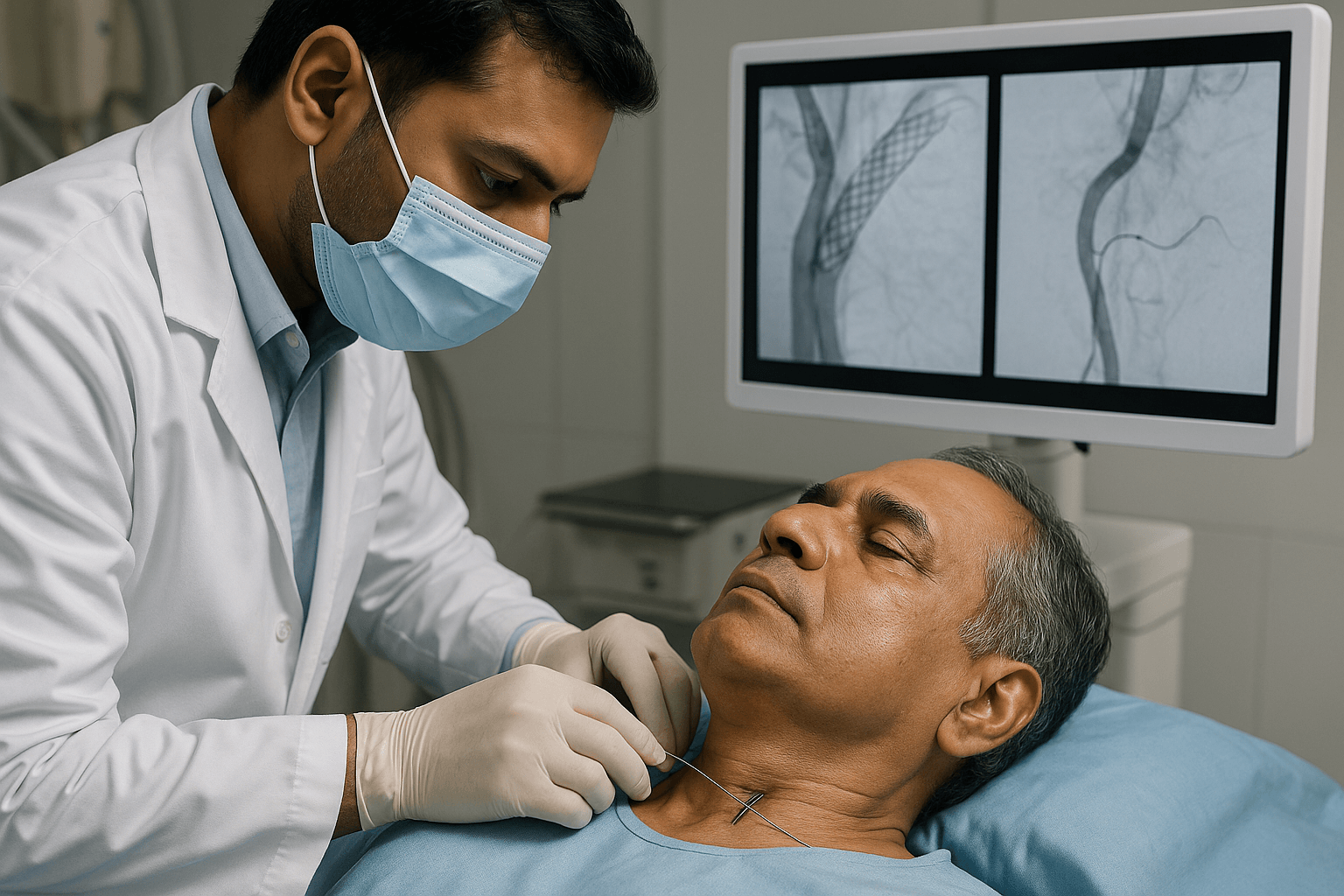
When the carotid arteries (the main blood vessels supplying your brain) become narrowed or blocked due to plaque, the risk of stroke increases significantly. Carotid Artery Stenting is a minimally invasive procedure designed to restore proper blood flow and reduce the chance of stroke.
What Is Carotid Artery Stenting?
Carotid Artery Stenting is a minimally invasive endovascular procedure where a small, expandable mesh tube called a stent is placed inside the carotid artery. This stent helps keep the artery open, ensuring steady blood supply to the brain.
In simpler words: doctors insert a tiny scaffold inside the neck artery to prevent blockages, reduce stroke risk, and improve brain circulation — without the need for open surgery.
Conditions We Treat
Carotid Artery Stenting is recommended for patients with:
- Carotid Artery Stenosis – narrowing of the artery due to fatty deposits (plaque)
- Transient Ischemic Attack (TIA) – mini-stroke symptoms such as temporary weakness, vision loss, or speech difficulty
- High Stroke Risk – patients with severe narrowing who cannot undergo open surgery (carotid endarterectomy)
- Recurrent Narrowing – when the artery becomes blocked again after prior surgery
Why Choose Carotid Artery Stenting?
- Prevents Stroke: Significantly lowers the risk of major strokes by restoring blood flow to the brain.
- Minimally Invasive: Performed via a small puncture in the groin or wrist — no large incision required.
- Faster Recovery: Most patients return home within 1–2 days.
- Safe & Proven: Backed by years of clinical research and used worldwide as an alternative to surgery.
Treatment Procedure
1. Diagnostic Evaluation
We begin with advanced imaging scans such as CT angiography, MR angiography, or carotid Doppler ultrasound to confirm the blockage.
2. Catheter Insertion
A thin tube (catheter) is inserted through the groin or wrist and guided to the carotid artery under fluoroscopy (live X-ray).
3. Angioplasty & Stenting
A small balloon is inflated to widen the narrowed artery, followed by placement of a stent to keep the artery open permanently.
4. Post-Procedure Care
Patients are monitored for a short time, started on blood-thinning medications, and usually discharged within 24–48 hours.
What to Expect During Treatment
- Detailed Evaluation – Neurological and vascular assessments along with imaging tests.
- Personalized Plan – We determine whether stenting is safer for you compared to surgery.
- Safe Procedure – Performed under local anesthesia or light sedation, minimizing risks.
- Rehabilitation Support – Lifestyle advice, physiotherapy (if prior stroke occurred), and long-term follow-up for stroke prevention.
When Should You Consider Carotid Artery Stenting?
- If you have narrowing of more than 70% in your carotid artery
- If you have experienced stroke or TIA symptoms recently
- If you are not fit for open surgery due to age or other medical conditions
- If your artery has re-narrowed after previous surgery
Why Choose Us?
With over 20 years of expertise in neurovascular and endovascular procedures, I ensure every Carotid Artery Stenting procedure is carried out with precision, safety, and compassionate care. Our team uses the latest FDA-approved stents and advanced imaging technology for optimal outcomes.
Take the Next Step Towards Stroke Prevention
You don’t have to live in constant fear of stroke. Carotid Artery Stenting offers a safe, minimally invasive, and effective way to protect your brain and regain peace of mind.